Founded in 2004 to revolutionize surgical practice through evidence-based innovation
The New European Surgical Academy (NESA) was established in 2004 by a group of surgical opinion leaders from different disciplines who recognized an urgent need to re-evaluate traditional surgical procedures. Many operations, although widely taught and practiced, are based more on tradition than on solid evidence. Techniques often varied significantly according to personal preference rather than scientific validation.
The founders of NESA believed that while tradition has an important place in cultural life, it can hinder innovation in surgery. Their mission was to critically assess existing procedures, improve them where possible, and develop entirely new approaches that are safer, simpler, and more efficient.
Today, NESA functions as an international, interdisciplinary network with members in 65 countries, making it a truly global academy dedicated to surgical excellence.
Our signature motto expresses our commitment to surgical clarity and precision: removing unnecessary steps while preserving everything essential for patient safety and optimal outcomes.
Not every simple procedure is optimal, but every optimal procedure should be simple.” We believe that the best surgical methods combine simplicity with scientific validation.
“There is never a sunset over the New European Surgical Academy.” Across continents and time zones, our global community works in continuous motion, united by a shared purpose: to advance surgical innovation and make safer, better care accessible everywhere in the world.
NESA’s mission is to advance surgical science and practice through innovation, education, and global collaboration. We work to ensure that evidence-based surgical techniques are accessible to all, regardless of geographic or economic barriers.
The New European Surgical Academy (NESA) established the first European working group on Natural Orifice Surgery, procedures that allow even major surgical interventions to be performed without visible scars, with less pain and shorter hospital stays. Examples include the trans-Douglas cholecystectomy and the transoral thyroidectomy.
These techniques have been disseminated through dedicated surgical workshops and peer-reviewed scientific publications.
We work to reduce variation in surgical training worldwide, providing evidence-based models that can be taught consistently across different countries and healthcare systems.
By bringing together expertise from general surgery, obstetrics and gynecology, urology, otorhinolaryngology, oncology, endocrine surgery, regenerative surgery, anesthesiology, and resuscitation, we foster cross-pollination of ideas and innovation.
We support cutting-edge research in surgical innovation, from robotics and AI to natural orifice surgery and oncology.
We conduct workshops and training programs in countries with limited resources, transferring surgical know-how where it is needed most.
We promote early detection of medical and surgical problems and advocate for preventive measures that reduce the need for complex interventions.

President
Michael Stark is the Founder and President of the New European Surgical Academy (NESA). He is known as the developer of a modified Cesarean Section, ...

Co-President
Prof. Gian Carlo Di Renzo serves as Co-President of the New European Surgical Academy and is Professor of Obstetrics , Maternal-Fetal Medicine and Gynecology, past ...

Board Member
Professor Sven Becker’s clinical focus is on advanced laparoscopy and minimally invasive surgery, including endometriosis-surgery, surgical oncology and gynecological oncology. His academic and scientific focus ...

Board Member
Prof. Dr. Werner Seebauer studied human medicine at the Johann Wolfgang von Goethe University in Frankfurt am Main and nutritional sciences at the Justus Liebig ...

Board Member
Prof. Vlad Tica is Chairman of the Department of Gynecology at “Ovidius” University of Constanța, Romania, where he combines clinical leadership with academic teaching and ...
Board Member
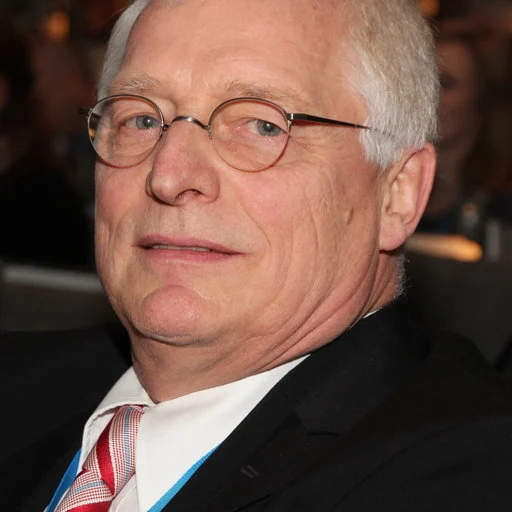
Prof. Klaus Vetter is a German obstetrician and gynecologist with a distinguished career in clinical leadership, professional society service, and academic contributions. He served as ...

Board Member
Dr. Kai Witzel is a habilitated surgeon and academic at Paracelsus Medical University in Salzburg, Austria. He is a specialist in minimally invasive, laparoscopic, and ...

Board Member
Professor Georgios Zografos has been Professor of Surgery and Chairman of the 1st Department of Propaedeutic Surgery, Medical School, National and Kapodistrian University of Athens, ...

Board Member
Eytan R. Barnea, MD FACOG is internationally recognized, awarded investigator in early pregnancy translational research with implications to patient treatment. NESA board member and scientific ...

Scientific Advisor
Prof. Dr. med. Dr. h.c. Jalid Sehouli is a gynaecologic oncologist, researcher, and professor of gynaecology at Charité University Hospital in Berlin. He currently serves ...

Scientific Advisor
Dr. Avinoam Tzabari is a senior obstetrician and gynecologist at Mayanei Hayeshua Medical Center in Israel and is affiliated with the Faculty of Medicine at ...

NESA's strategic liaison
Dr. Jacqueline H. Barnea, DBA is NESA’s Strategic Liaison. To this transformational project, she brings her global vision, adaptability, flexibility, and out-of-the box innovative thinking. ...
NESA
We firmly believe that the internet should be available and accessible to anyone, and are committed to providing a website that is accessible to the widest possible audience, regardless of circumstance and ability.
To fulfill this, we aim to adhere as strictly as possible to the World Wide Web Consortium’s (W3C) Web Content Accessibility Guidelines 2.1 (WCAG 2.1) at the AA level. These guidelines explain how to make web content accessible to people with a wide array of disabilities. Complying with those guidelines helps us ensure that the website is accessible to all people: blind people, people with motor impairments, visual impairment, cognitive disabilities, and more.
This website utilizes various technologies that are meant to make it as accessible as possible at all times. We utilize an accessibility interface that allows persons with specific disabilities to adjust the website’s UI (user interface) and design it to their personal needs.
Additionally, the website utilizes an AI-based application that runs in the background and optimizes its accessibility level constantly. This application remediates the website’s HTML, adapts Its functionality and behavior for screen-readers used by the blind users, and for keyboard functions used by individuals with motor impairments.
If you’ve found a malfunction or have ideas for improvement, we’ll be happy to hear from you. You can reach out to the website’s operators by using the following email
Our website implements the ARIA attributes (Accessible Rich Internet Applications) technique, alongside various different behavioral changes, to ensure blind users visiting with screen-readers are able to read, comprehend, and enjoy the website’s functions. As soon as a user with a screen-reader enters your site, they immediately receive a prompt to enter the Screen-Reader Profile so they can browse and operate your site effectively. Here’s how our website covers some of the most important screen-reader requirements, alongside console screenshots of code examples:
Screen-reader optimization: we run a background process that learns the website’s components from top to bottom, to ensure ongoing compliance even when updating the website. In this process, we provide screen-readers with meaningful data using the ARIA set of attributes. For example, we provide accurate form labels; descriptions for actionable icons (social media icons, search icons, cart icons, etc.); validation guidance for form inputs; element roles such as buttons, menus, modal dialogues (popups), and others. Additionally, the background process scans all the website’s images and provides an accurate and meaningful image-object-recognition-based description as an ALT (alternate text) tag for images that are not described. It will also extract texts that are embedded within the image, using an OCR (optical character recognition) technology. To turn on screen-reader adjustments at any time, users need only to press the Alt+1 keyboard combination. Screen-reader users also get automatic announcements to turn the Screen-reader mode on as soon as they enter the website.
These adjustments are compatible with all popular screen readers, including JAWS and NVDA.
Keyboard navigation optimization: The background process also adjusts the website’s HTML, and adds various behaviors using JavaScript code to make the website operable by the keyboard. This includes the ability to navigate the website using the Tab and Shift+Tab keys, operate dropdowns with the arrow keys, close them with Esc, trigger buttons and links using the Enter key, navigate between radio and checkbox elements using the arrow keys, and fill them in with the Spacebar or Enter key.Additionally, keyboard users will find quick-navigation and content-skip menus, available at any time by clicking Alt+1, or as the first elements of the site while navigating with the keyboard. The background process also handles triggered popups by moving the keyboard focus towards them as soon as they appear, and not allow the focus drift outside it.
Users can also use shortcuts such as “M” (menus), “H” (headings), “F” (forms), “B” (buttons), and “G” (graphics) to jump to specific elements.
We aim to support the widest array of browsers and assistive technologies as possible, so our users can choose the best fitting tools for them, with as few limitations as possible. Therefore, we have worked very hard to be able to support all major systems that comprise over 95% of the user market share including Google Chrome, Mozilla Firefox, Apple Safari, Opera and Microsoft Edge, JAWS and NVDA (screen readers).
Despite our very best efforts to allow anybody to adjust the website to their needs. There may still be pages or sections that are not fully accessible, are in the process of becoming accessible, or are lacking an adequate technological solution to make them accessible. Still, we are continually improving our accessibility, adding, updating and improving its options and features, and developing and adopting new technologies. All this is meant to reach the optimal level of accessibility, following technological advancements. For any assistance, please reach out to